Vacutainer tubes
Home
Blood Collection Process
Functional Classification and Colour Codes
History
Recent Trends and Recommendations
Research References & Citations
About-us and Contact Information
Sitemap
Home >
Functional Classification and Colour Codes
Vacutainer tubes have found wide recognition due to their functional ease. The venipuncture protocol employing a syringe requires elaborate preparations for blood sample analysis in terms of addition of appropriate additives into the tubes that carries more risks of sampling and analytical errors.
Vacutainer tubes have a color-coded plastic cap. The color code of the caps indicates the blood additives the tube contains. Additives are chemical substances that preserve the blood for processing in the laboratory.
BD Vacutainer
The additives include anticoagulants like EDTA, Sodium citrate and Heparin. Some vacutainer tubes have a gel that has an intermediate density between blood cells and the serum. During centrifugation of these gel containing tubes, the blood cells sink to the bottom of the tube and are covered by a layer of the gel leaving the serum on top. When plasma containing blood platelets is required for analysis a vacutainer that does not contain gel or a clotting agent is used and centrifuged. The color code has a standard protocol and hence, finds universal application across the medical domain.
Color Code:
1. Gold or 'Tiger' Red/Black Top: These colour coded vacutainers are utilized in chemistry, immunology and serology determinations. They contain no other additives other than clot activator and gel for serum separation.
2. Orange or Grey/ Yellow 'Tiger' Top: Orange or Grey/Yellow 'Tiger' top vacutainers are utilized for STAT serum testing. They contain Thrombin, a rapid clot activator.
3. Green: Green top vacutainers contains Sodium Heparin or Lithium Heparin that inactivate thrombin and thromboplastin. They are useful in plasma determinations.
Green Cap, Heparin Vacutainer
4. Purple or lavender: Purple tubes are used for whole blood is required analysis. They are utilized for complete blood counts (CBC), blood smears, blood typing and screening.
Lavender Colour Cap, EDTA Vacutainer
These tubes have the potassium salt of EDTA as anticoagulant.
5. Grey: These tubes have sodium fluoride and potassium oxalate and are used for blood glucose determination.
Grey Colour caps, Sodium Flouride Vacutainer
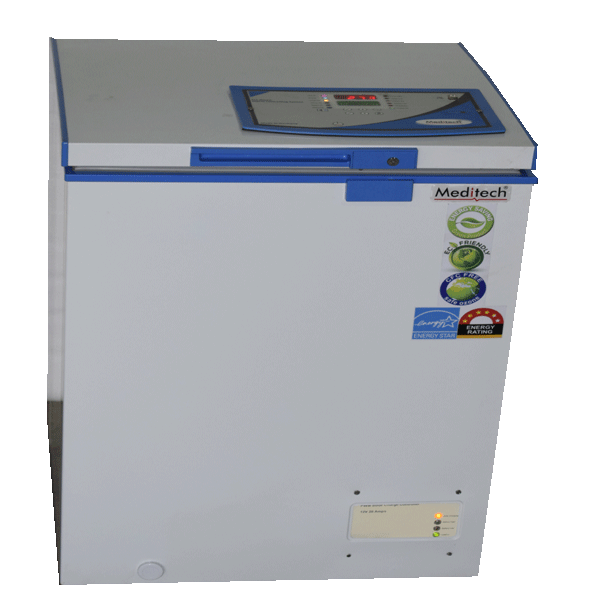
6. Light blue: These tubes are kept inside a solar powered refrigerator have a reversible anticoagulant sodium citrate in measured amount and useful in blood coagulation assays like prothrombin time and partial thromboplastin time.
Blue Cap, Sodium Citrate Vacutainer
7. Dark Blue: These tubes contain added anticoagulant sodium heparin or EDTA as an additive. These tubes are primarily used for trace metal analysis and toxicology tests.
8. Red tubes (glass): These are additive free vacutainers used for tests for antibodies, chemistry and drugs.
9. Light yellow: These tubes contain sodium polyanethol sulfonate (SPS) and acid-citrate-dextrose (ACD) as an additive. These are used for blood culture specimens, HLA phenotyping and parental testing.
10. Tan: These tubes lead free and hence used for lead content determinations.
In addition to the color code, the plastic caps also have typical indicators. Opaque caps indicate Vacutainer tubes with a normal vacuum. Translucent-caps indicate Vacutainer tubes with a lower vacuum. Weaker suction tubes are suitable in elderly carrying the risk venous collapse during vacuum suction.
Sign in|Report Abuse|Print Page|Remove Access|Powered By Google Sites
Home
Blood Collection Process
Functional Classification and Colour Codes
History
Recent Trends and Recommendations
Research References & Citations
About-us and Contact Information
Sitemap
Home >
Functional Classification and Colour Codes
Vacutainer tubes have found wide recognition due to their functional ease. The venipuncture protocol employing a syringe requires elaborate preparations for blood sample analysis in terms of addition of appropriate additives into the tubes that carries more risks of sampling and analytical errors.
Vacutainer tubes have a color-coded plastic cap. The color code of the caps indicates the blood additives the tube contains. Additives are chemical substances that preserve the blood for processing in the laboratory.
BD Vacutainer
The additives include anticoagulants like EDTA, Sodium citrate and Heparin. Some vacutainer tubes have a gel that has an intermediate density between blood cells and the serum. During centrifugation of these gel containing tubes, the blood cells sink to the bottom of the tube and are covered by a layer of the gel leaving the serum on top. When plasma containing blood platelets is required for analysis a vacutainer that does not contain gel or a clotting agent is used and centrifuged. The color code has a standard protocol and hence, finds universal application across the medical domain.
Color Code:
1. Gold or 'Tiger' Red/Black Top: These colour coded vacutainers are utilized in chemistry, immunology and serology determinations. They contain no other additives other than clot activator and gel for serum separation.
2. Orange or Grey/ Yellow 'Tiger' Top: Orange or Grey/Yellow 'Tiger' top vacutainers are utilized for STAT serum testing. They contain Thrombin, a rapid clot activator.
3. Green: Green top vacutainers contains Sodium Heparin or Lithium Heparin that inactivate thrombin and thromboplastin. They are useful in plasma determinations.
Green Cap, Heparin Vacutainer
4. Purple or lavender: Purple tubes are used for whole blood is required analysis. They are utilized for complete blood counts (CBC), blood smears, blood typing and screening.
Lavender Colour Cap, EDTA Vacutainer
These tubes have the potassium salt of EDTA as anticoagulant.
5. Grey: These tubes have sodium fluoride and potassium oxalate and are used for blood glucose determination.
Grey Colour caps, Sodium Flouride Vacutainer
6. Light blue: These tubes are kept inside a solar powered refrigerator have a reversible anticoagulant sodium citrate in measured amount and useful in blood coagulation assays like prothrombin time and partial thromboplastin time.
Blue Cap, Sodium Citrate Vacutainer
7. Dark Blue: These tubes contain added anticoagulant sodium heparin or EDTA as an additive. These tubes are primarily used for trace metal analysis and toxicology tests.
8. Red tubes (glass): These are additive free vacutainers used for tests for antibodies, chemistry and drugs.
9. Light yellow: These tubes contain sodium polyanethol sulfonate (SPS) and acid-citrate-dextrose (ACD) as an additive. These are used for blood culture specimens, HLA phenotyping and parental testing.
10. Tan: These tubes lead free and hence used for lead content determinations.
In addition to the color code, the plastic caps also have typical indicators. Opaque caps indicate Vacutainer tubes with a normal vacuum. Translucent-caps indicate Vacutainer tubes with a lower vacuum. Weaker suction tubes are suitable in elderly carrying the risk venous collapse during vacuum suction.
Sign in|Report Abuse|Print Page|Remove Access|Powered By Google Sites

No comments:
Post a Comment